ConsultingIreland have signed a new corporation agreement with our 5th international partner – Hungary.
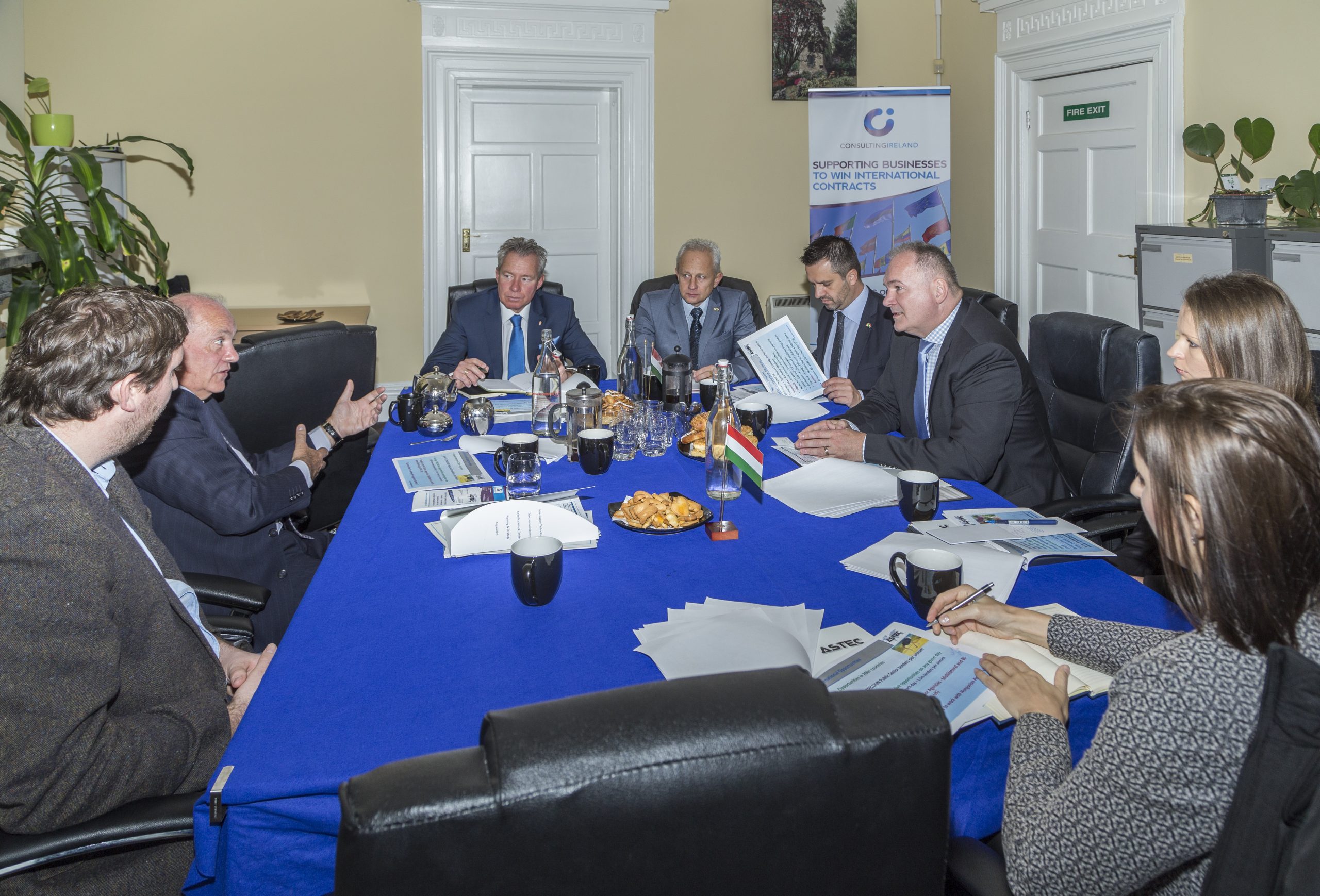

ConsultingIreland have signed a new corporation agreement with our 5th international partner – Hungary.
Irish Businesses are constantly being encouraged to look for opportunities beyond these shores and outside our traditional markets such as the UK, US and Western Europe. The recent decision by our nearest neighbour to withdraw from the European experiment has focussed minds on the need for a speedier and more expansive market diversification.
Yet Ireland has continued to ignore significant €multi-billion opportunities in the developing countries where payment is secure and advances of up to 60% are not uncommon.
Untapped Markets
The markets we refer to are those funded by the major International Financing Institutions (IFIs – e.g. EC, United Nations, World Bank etc.). The numerous opportunities – over 200,000 daily service and supply tenders across all sectors – are being aggressively and successfully pursued by both private and public sector organisations from many of our EC partner countries.
Projects funded by the likes of the EC and World Bank are often a prelude to other private ‘downstream’ business opportunities in these markets and as such help to promote a more strategic market-entry approach and provide key business intelligence to these increasingly important emerging markets.
From a very-respected position some three decades ago, Ireland’s position continues to plummet where we are now the lowest-ranked member among the initial EC12 and currently in 24th position in the EC28 activity table. The advent of the ‘Celtic Tiger’ only helped to hasten this dis-engagement process from these key markets, conservatively estimated at over €1trillion per annum.
While Ireland may have the current EC Commissioner for Agriculture and Rural Development, not one Irish Agri/Food firm is pre-selected in the EC top 60 Agri/Food firms providing little in the way of policy, strategy and advice to these international markets.
The UK on the other-hand is currently the most active and successful country at winning EC Funded work due in part to the support given by Government through its Foreign Embassies, State Agencies and a focussed International Aid programme that recognises the importance of trade. This is further enhanced by the fact that English is the language of choice for most of these global tenders.
The Positives of BREXIT
With BREXIT, the future selection for any EC-Funded business is likely to only include organisations from the remaining 27 Member States. In our ConsultingIreland review we are able to identify well over 4,000 UK entities who will no longer be eligible to participate directly in these EC-funded projects. Ireland will then be the main English-speaking member and should be well positioned to capitalise on the British exit and enable our firms to replace a number of the existing UK market participants.
While many Irish organisations shy away from this work believing it to be too bureaucratic, the fact is that the bidding process and procedure are always the same no matter whether the opportunity is in Brazil, Mauritius, Washington or Fiji.
My own SME company has worked in these markets for close on 30 years and in over 100 countries, but rather than being concerned by the country of delivery we view our client as the EC or World Bank. Tenders are available on a daily basis and Ireland’s expertise and experience is certainly relevant and required and, from a cash-flow perspective, the major IFIs always pay fairly promptly.
‘Best Practice’
By way of comparison, Denmark is now winning 10 times the IFI-funded business than that of Ireland and figures published by independent sources show a majority of the newer EC Member States are more engaged with the major IFIs and these external markets. Even Albania, a non-EC Member State, is much more active and their SMEs more engaged.
Elsewhere many of our more established European partners in e.g. France, Germany etc. are engaging highly trained Irish experts for international IFI assignments – in part because of their English language proficiency. The fact that the successful companies are primarily SMEs, leaves little doubt that Ireland has missed – and continues to miss – major business opportunities.
Fig. 1 below shows that our other European partners have no such hesitation in engaging with the IFIs.
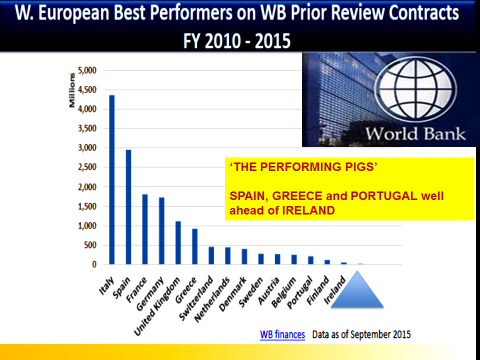
FIG. 1 WORLD BANK ACTIVITY FOR WESTERN EUROPEAN COMPANIES
Need for a Trade Focus
The Irish Government and its Agencies tend to focus on the less commercial elements of the IFI and emerging market opportunities. Significant effort in manpower and financial support is given by the Government and its Agencies to EC R&D programmes such as Horizon 2020. But these programmes account for less than 8% of EC funds and are primarily the target of selected Universities, Multinationals and specialist research bodies. One has to wonder why Ireland is prepared to promote engagement in H2020 but not the more-commercial tenders, even though the Funder is the same.
Government’s other international focus is on the NGO/Aid market, providing support to the developing markets. However what these markets want and need is ‘Better Aid more Trade’. Going forward it is important that Ireland’s trade approach is less NGO-led and more commercially focussed, mirroring that of the more successful countries.
The success of other nations and EC partner countries is due to the fact they are able to multi-task/multi-focus and benefit from the existing synergies in these various markets while prioritising the commercial element of their involvement. Ireland lacks that ‘connectivity’ between the key parties – Government, Embassies, State Agencies, NGOs, Business Associations and Commercials.
Government Engagement Needed
Our analysis indicate that Government support is a key element in the overall success of such an undertaking. The benefits of better ‘connectivity’ is demonstrated by the success of Hungary where the Government provides strong administrative and financial support to its companies and over the last year they have recorded some extremely positive results for their members.
This structured approach working with the IFIs should be a ‘first-step’ and can be part of an organisations overall strategy for expansion into new markets, resulting in greater profitability and ensuring less reliance on the domestic marketplace.
If Ireland can embrace these markets, then Irish expertise and products will reach to a greater number of countries and that in turn will help us to start to climb back up the IFI activity table from our lowly 24th position.

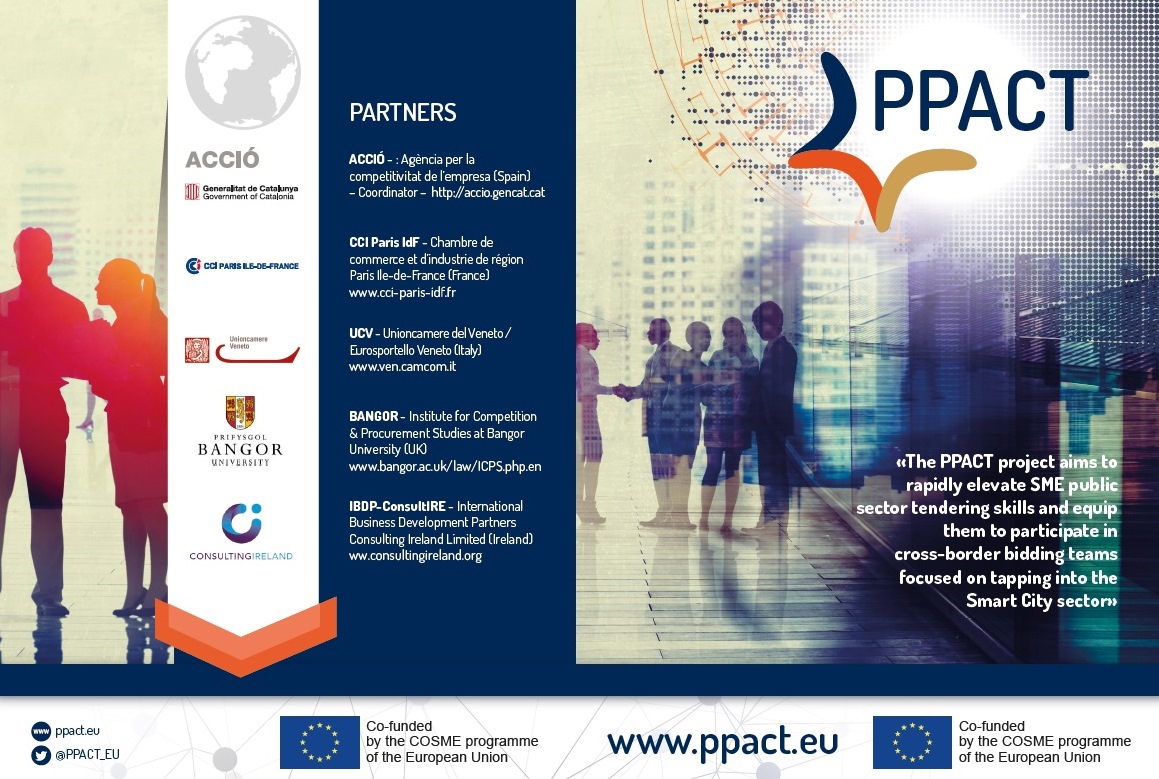
The PPACT (Public Procurement and Cross-border Tendering) project aims to rapidly elevate SME public sector tendering skills and equip them to participate in cross-border bidding teams focused on tapping into the Smart City sector.
The European Partner on the EC Funded ‘Public Procurement and Cross Border Tendering ‘ (PPACT) will meet to further the PPACT Programme including the development of partner training courses and plan future B2B events for 125 companies to allow them partner up for and tender on future National and Regional Government opportunities, particularly in the ‘Smart Cities’ areas such as Waste, Water, Transport, Energy etc.
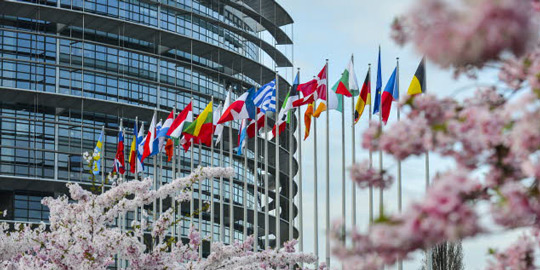
ConsultingIreland presentation on winning business with the EC to members of the Brussels and Flemish Chambers. Topics covered will include identification of tenders, partnering and tips for submitting tenders.
Our tasks are to execute and communicate the policies of the European Commission but also open up newer markets for SMEs (fairs and business partnering services). One of our key areas in this field is public procurement as this is a market which is often too difficult to access for SMEs.
The Enterprise Europe Network office at Dublin Chamber of Commerce, in association with USAID and Invest Northern Ireland are hosting a delegation of IT companies from Albania, bosnia and Herzegovina, Macedonia, Moldova, Serbia and Ukraine on Tuesday 17th October 2017.
The delegation of nearly 40 IT companies are seeking meetings with Irish companies and IT associations/clusters to discuss business opportunities in the areas of FinTech, eHealth, Travel Tech, Cyber Security, Telecom, among others.
Key benefits will be – networking and developing new business relationships; exploring new business opportunities (B2B and B2G), including joint ventures, consortiums, joint product development, exploring cooperation opportunities for International Financial Institutions (IFI) projects, internationalization, learning about new markets and export promotion and awareness.
Who should attend?
For more information and a detailed programme please click here.
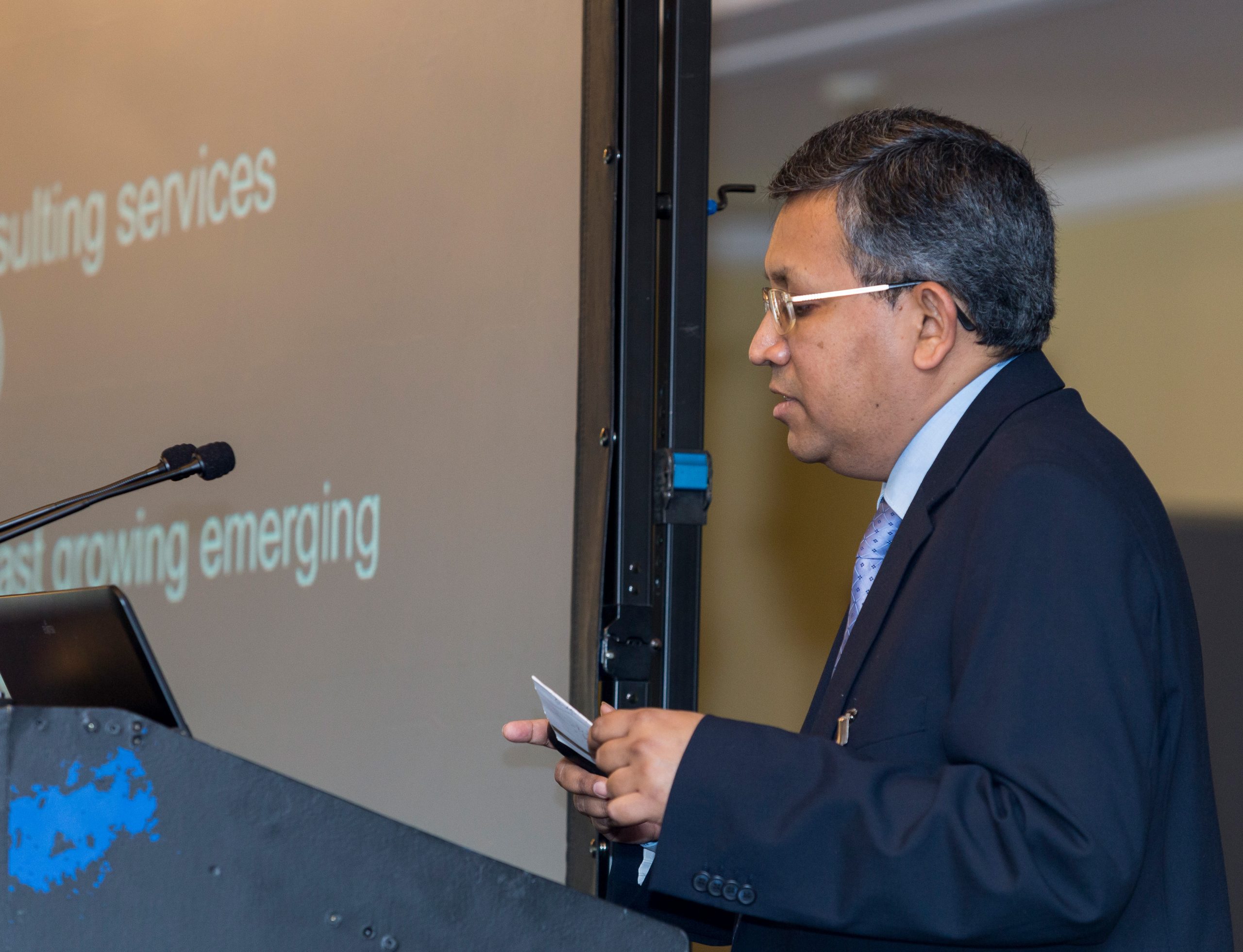
Enterprise Ireland and the Asian Development Bank (ADB) invite you to a seminar on Business Opportunities to inform companies about partnership opportunities with the ADB and provide tips and tricks to win ADB contracts.
The seminar will facilitate:
Programme
09.30 Registration
10.00 Welcome
10.05 Introduction to the Program of the Day; General outline ADB; Overview of procurement in constituency countries and success rates (Marc Rooijackers, Director’s Advisor constituency office)
10.30 Information about business opportunities; procurement and ADB’s new procurement policy (Jesper Pedersen, Senior Procurement Specialist)
11.15 Coffee Break
11.30 Opportunities and Developments in the Water and Urban sector (Michiel de Lijster, Senior Water Resource Specialist)
12.15 Experience from a company in working with the ADB
12.45 Geoscience Ireland and working with IFIs
13.00 Networking lunch
14.00 Bilateral Meetings
15.00 END

ConsultingIreland will make presentation on doing business in Kenya to an audience of Irish Organisations and Diaspora from the African State. Other speakers will include representatives from Kenyan Government, Embassy and Businesses.
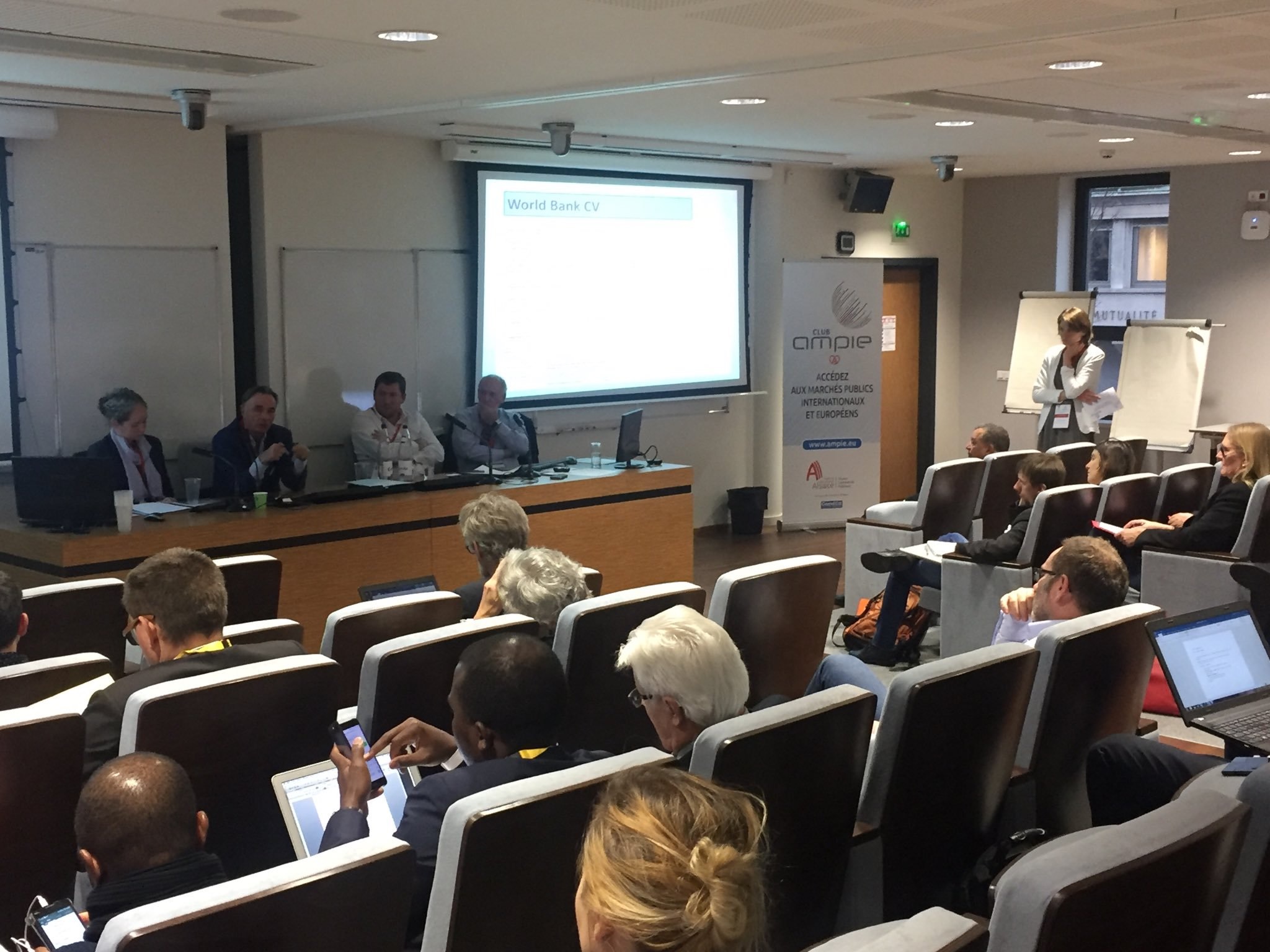
The Aviation cluster will be meeting to identify additional opportunities for the Group. College Ireland Aviation Services (CIAS) is the Group Lead.
Currently we are following the World Bank-funded programme ($286m) for Kenya and have expressed our interest to be involved in future tenders. The Team is working closely with Enterprise Ireland, Irish Embassy in Nairobi and Business Ireland Kenyan Association. We also have strong support from the Kenyan Embassy in Dublin.
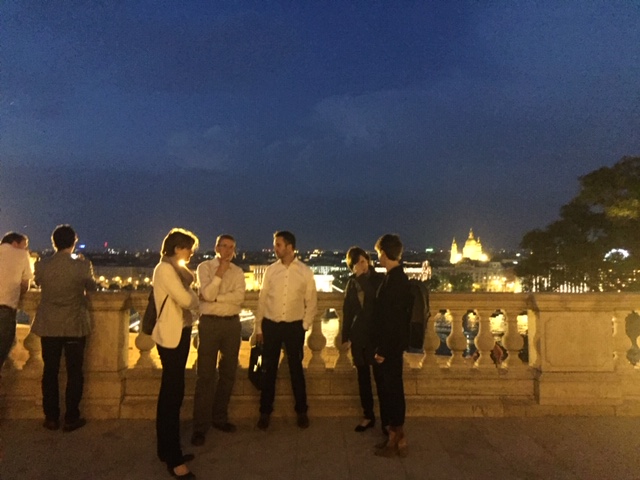
ConsultingIreland has recently signed a corporate partnership with EXIM Hungary. A conference about Irish-Hungarian business will be held in October this year in which we will address the ins and outs of doing business with Hungarian companies and how this can benefit your firm.